ScalaVisione

Sector · Bakery and patisserie

Printing a label is not the same as selling.

A weighing, labelling, till, and recipe-based production system for bakeries and patisseries. A product weighed at the counter generates its barcode, the label is printed, and scanning it at the till gives the price; stock runs from that chain itself.

ERPScale and LabelsPoint of SaleRecipe-Based Production
Configure and see the price
ScalaPasta — Bakery Scale, Label and Till System

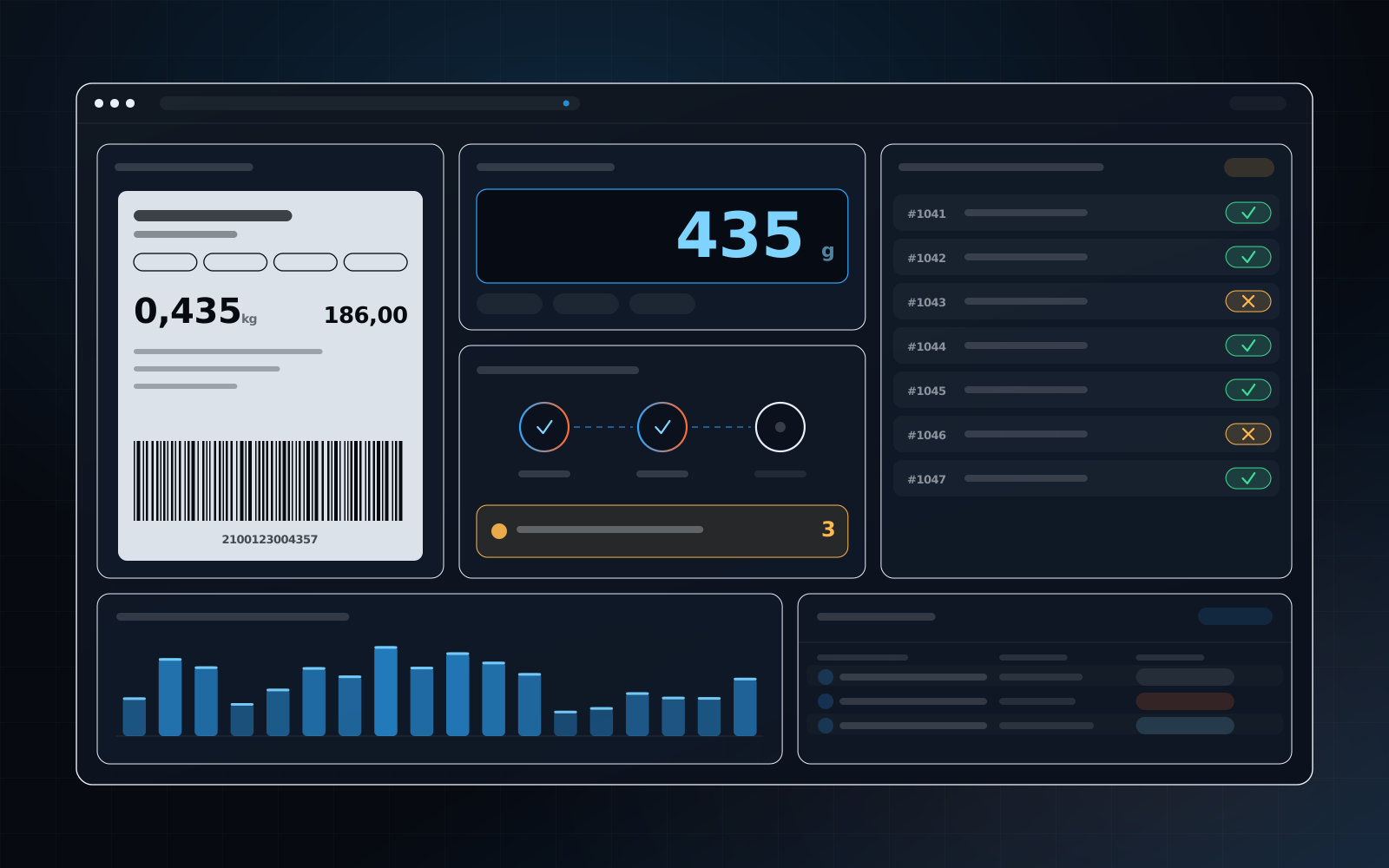
A product weighed at the counter generates its barcode, the label is printed, and scanning it at the till gives the price. Stock runs from that chain itself: weighing does not deduct stock, the till does. A labelled product goes to the display case, and it may not sell — it may become waste.

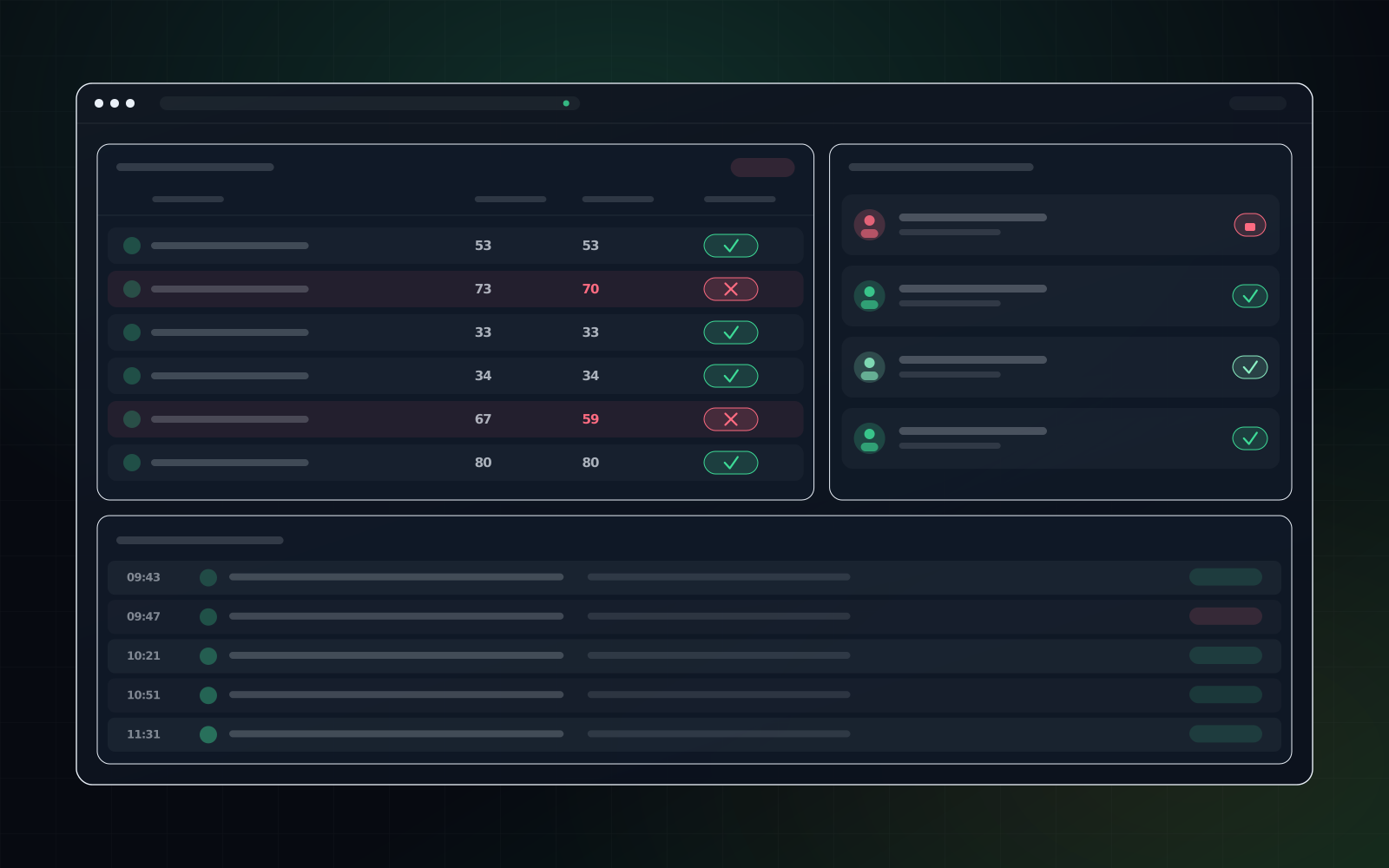
The gap in between is the scale-to-till reconciliation, and it is exactly where leakage shows up most often. Every printed label is recorded and marked as sold when scanned at the till; the difference is reported.

The barcode embeds weight, not price. A scheme that embeds price fills up at 999.99 TL, while a 1,500 TL layer cake is ordinary in a patisserie. On overflow the value is never clipped but raises an error: rather than silently selling at 500 TL, the system stops before the label is printed.

Problems it solves

  • 01The gap between labels printed at the scale and products sold at the till going untracked, so leakage stays invisible
  • 02A price-embedding barcode scheme filling up at 999.99 TL while a 1,500 TL cake is ordinary in a patisserie
  • 03Allergens and expiry dates being able to go missing from the label

Capabilities

01

Weight is embedded in the barcode

The scheme is prefix, PLU, value, and check digit. Prefixes: 21 grams, 22 pieces, 29 price. On overflow the value is never clipped but raises an error; a 1,500 TL cake fits the barcode too.

02

Scale ↔ till reconciliation

Every printed label is recorded and marked as sold at the till; the difference is reported. Leakage is caught where it appears.

03

Expiry-first ordering

The batch with the nearest date leaves first. In food, “first in, first out” is not enough; shelf life is what decides.

04

Mandatory label fields

Allergen, expiry date, name, quantity, and amount cannot be removed from a template. Allergens are also collected from the recipe and compared with the card; an incomplete label cannot be printed.

05

Recipe-based production

A production order is built on a recipe; when it closes, raw materials are deducted and the finished product and its batch are created. Allergen data is collected from the recipe; the recipe is the single source of truth.

06

Blind cash count

At closing the expected amount is not shown to the cashier. The count comes first and the comparison after; a discrepancy cannot be hidden.

Panel sections

Counter
Dashboard · Scale and labels · Till · Waste · Alerts
Production
Production orders · Production suggestion · Recipes · Batches
Stock
Stock status · Movements · Goods receipt · Suppliers
Catalogue
Products · Label templates · Label records
Management
Cash shifts · Receipts · Reports · Settings

Technology stack

Node 20ExpressSequelizeMySQL 8React 19ViteTailwind v4

Engineering notes

Negative stock is allowed only at the till: rejecting a receipt while the customer stands at the counter pushes the cashier towards selling without entering the product into the system. A negative balance is never silent — the alert engine raises a critical alert. Production gets no such flexibility: if the raw material is truly missing, the production did not happen.

VAT is separated back out of the price; the shelf price includes VAT and margin is calculated on the net base excluding VAT. Cash rounding applies only to the receipt total and never touches a line price.

Hardware is a deliberately separate phase: scale, label printer, and fiscal register connections are added later; the system also works without hardware and the places to plug it in are ready. The receipt the panel prints is not a legal document, and the preview says “no fiscal value”. The core is protected by 47 automated tests and the end-to-end API by 55.

Other ERP systems

Frequently asked questions

What people ask us, answered briefly and plainly.

What is ScalaPasta?

ScalaPasta is a sector-specific ERP for bakery and patisserie. A weighing, labelling, till, and recipe-based production system for bakeries and patisseries. A product weighed at the counter generates its barcode, the label is printed, and scanning it at the till gives the price; stock runs from that chain itself.

ScalaPasta: which problems does it solve?

The gap between labels printed at the scale and products sold at the till going untracked, so leakage stays invisible; A price-embedding barcode scheme filling up at 999.99 TL while a 1,500 TL cake is ordinary in a patisserie; Allergens and expiry dates being able to go missing from the label.

ScalaPasta: what are its key capabilities?

Weight is embedded in the barcode: The scheme is prefix, PLU, value, and check digit. Scale ↔ till reconciliation: Every printed label is recorded and marked as sold at the till; the difference is reported. Expiry-first ordering: The batch with the nearest date leaves first. Mandatory label fields: Allergen, expiry date, name, quantity, and amount cannot be removed from a template. Recipe-based production: A production order is built on a recipe; when it closes, raw materials are deducted and the finished product and its batch are created. Blind cash count: At closing the expected amount is not shown to the cashier.

ScalaPasta: what technology is it built on?

Node 20, Express, Sequelize, MySQL 8, React 19, Vite, Tailwind v4.

ScalaPasta: how do pricing and quotes work?

Pricing depends on how many people will use it, which sections are opened, and whether it must connect to other programs. After the conversation we send a written quote with scope, timeline, and a firm price within 48 hours at the latest.

ScalaPasta: is there support after delivery?

Yes. For one year after delivery, updates, technical support, and server maintenance continue at no extra charge.
Let's begin

Which units do you work in, which document chain do you follow? We map the scope and prepare a clear quote within 48 hours.

By submitting the form, you allow us to contact you regarding your request.

or info@scalavisione.com.tr