ScalaVisione

Sector · Institutional catering and corporate kitchens

The goods on the invoice must be the goods that arrived.

A procurement, warehouse, and invoice-control system for institutional caterers and corporate kitchens. The incoming invoice is compared with the goods received, and a short delivery is always flagged “Difference”. Permissions are filtered on the server, not merely hidden on screen.

ERPInvoice ControlRoles and PermissionsSupplier Portal
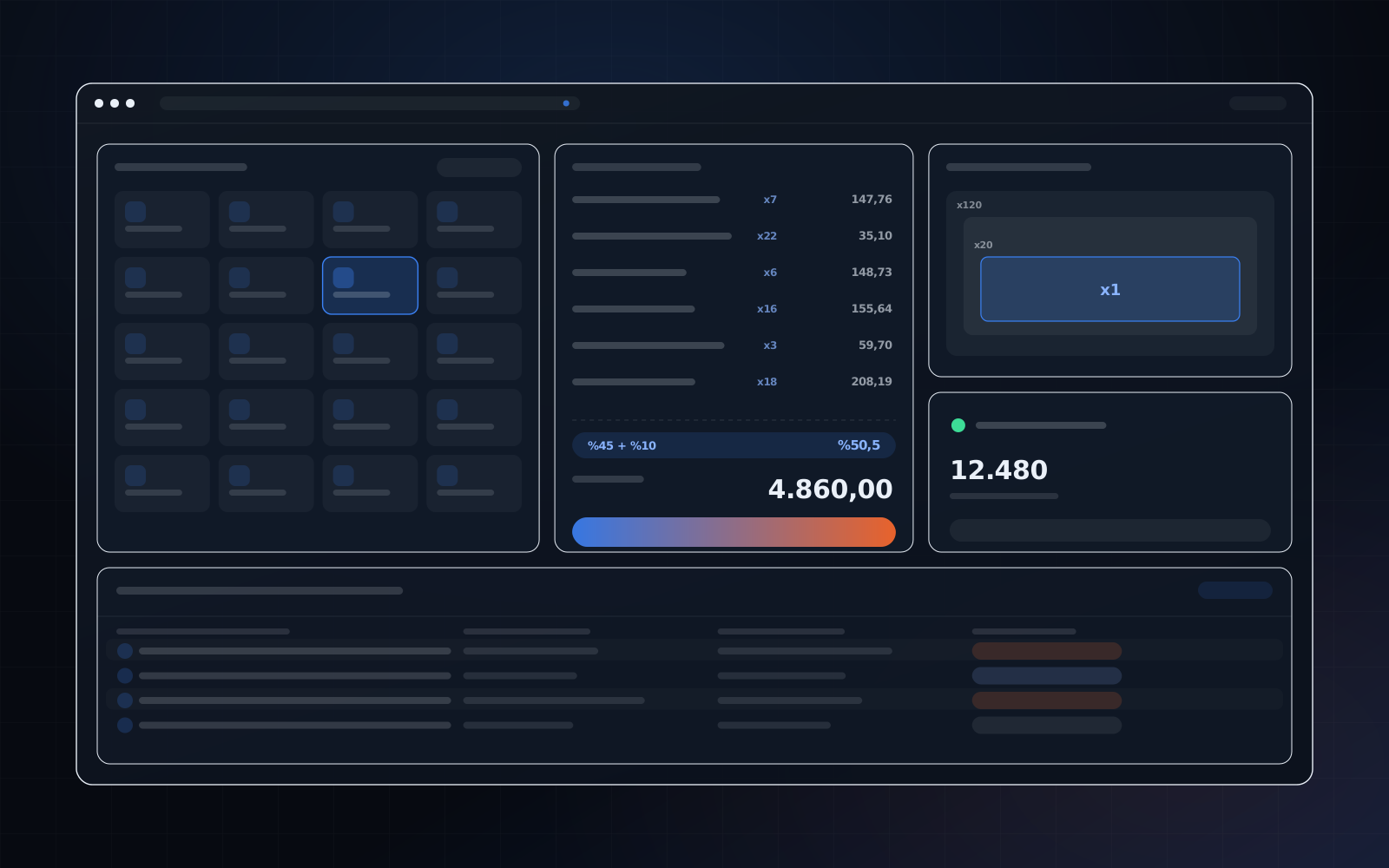
Configure and see the price
Catering ERP — Institutional Catering Procurement and Invoice Control

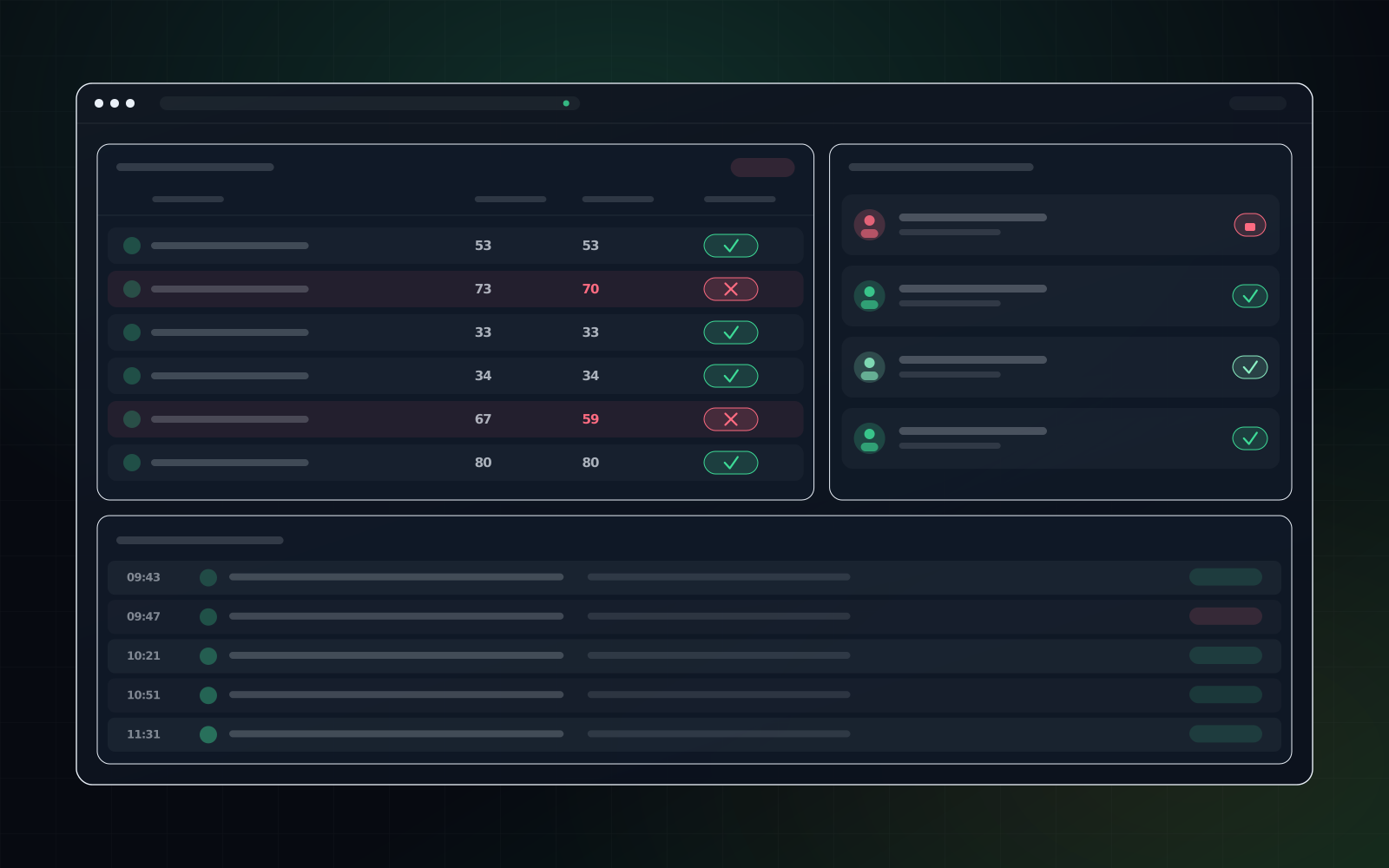
The incoming invoice is compared with the goods received, and a short delivery is always flagged “Difference”. Percentage tolerance applies only to price deviation — a 5 kg shortfall is never mistaken for being within tolerance and missed.

Every user sees only the products and prices they are permitted to. Permissions are enforced by filtering on the server rather than hiding things on screen: the package is built per user on the server, products outside permission never enter it, and the chef never receives a price.

The language is deliberately plain (“My Warehouse”, “Who Did What”); it was designed for a kitchen team that does not want technical wording. Because every action is recorded with who did it and when, the person responsible can be found when something goes wrong.

Problems it solves

  • 01The quantity on the invoice not matching the goods that entered the warehouse, with a 5 kg shortfall going unnoticed
  • 02Not being able to trace who changed what, so nobody can be found responsible when something goes wrong
  • 03A chef or product-group manager seeing prices and products they should not see

Capabilities

01

Invoice ↔ delivery comparison

A short delivery always reads “Difference”. Percentage tolerance applies only to price deviation; a 5 kg shortfall never slips through, and nobody pays for goods that did not arrive.

02

Product-group managers

Groups such as pulses, vegetables, and meat sit on their own manager's screen; products outside permission never enter the package. Everyone manages only their own group.

03

Chef screen

The chef never receives a price; the server does not send the information at all, and hiding it on screen is not treated as enough. Price data does not circulate in the kitchen.

04

Supplier portal

The supplier signs in with their own account and sees only their own records; correspondence with suppliers moves into the panel.

05

Who Did What

Every action is recorded with who did it and when, so there is no argument over responsibility.

06

Return rules

Refund money is not written into turnover and materials are not deducted a second time; “Back in Warehouse” adds it back to stock. Neither stock nor turnover gets inflated.

Panel sections

Daily work
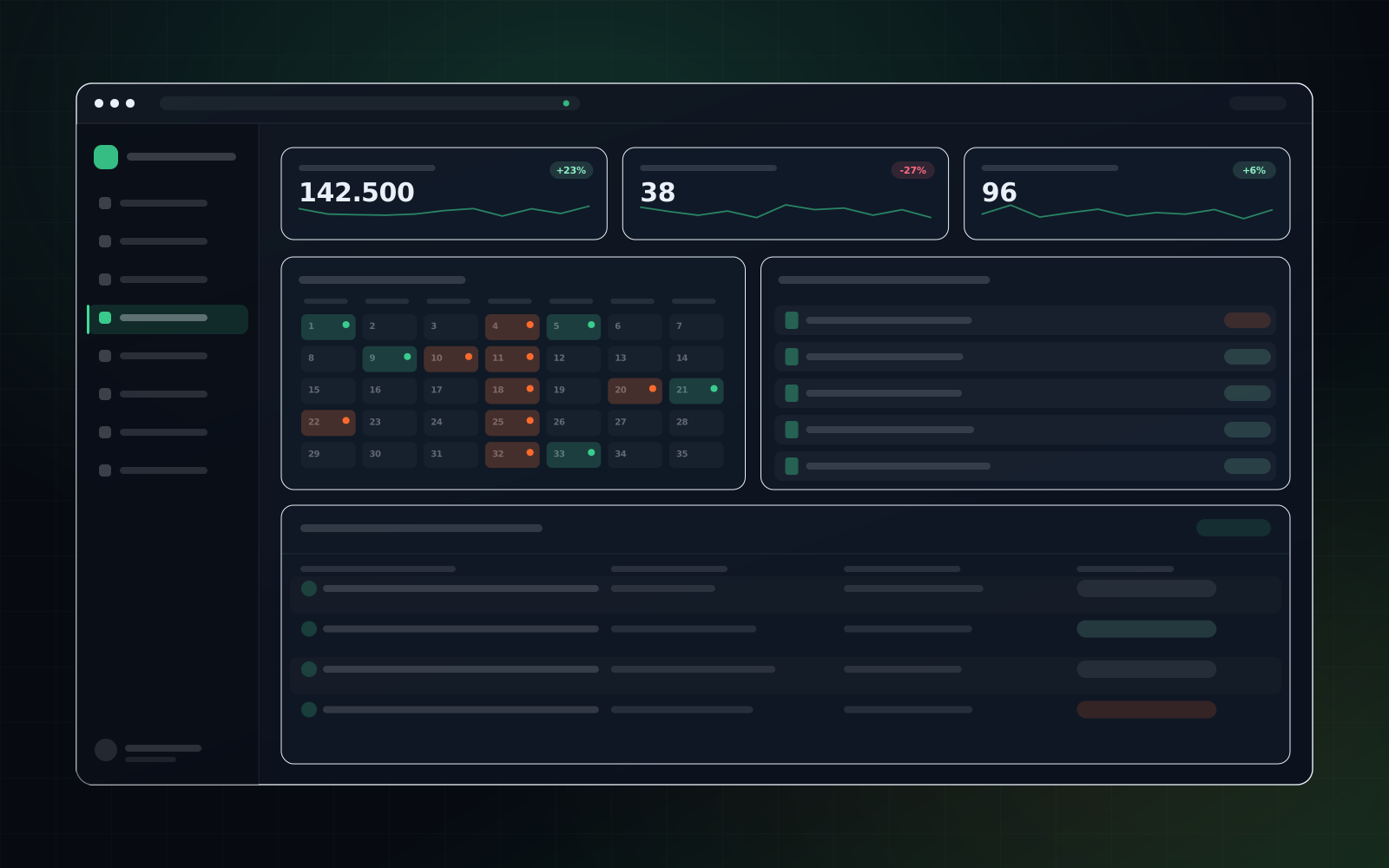
Overview · Meals · My sales · Returns · My customers
My warehouse
Warehouse · Stock issue · Goods in/out · Waste · Stock count · Product groups
Purchasing / suppliers
Supplier orders · My suppliers · Incoming invoices · Price-difference tracking · Other payments
Kitchen
Recipes · Daily meal production
Reports
Daily profit/loss · Overall cost report
System
Staff and permissions · Who Did What · Invoice connection settings
Supplier sign-in
Supplier screen

Technology stack

Node 20Express 5SequelizeMySQL 8React 18ViteMUI v9

Engineering notes

The calculation and role tables live in one place, and the panel imports those same files directly. The number shown on screen and the number the server calculates therefore come from the same function: recipe requirement, portion cost, daily profit/loss, and VAT are calculated there.

Permissions are filtered on the server: a product outside permission never enters the package, and the chef's price arrives empty. Hiding it on screen is not enough; if the rule is not on the server, the data is visible in the network request.

Setup is a simulation: it replays 60 days day by day. Rule and API tests (26 core, 38 end-to-end) run automatically; a production install opens only the schema, the product groups, and the first administrator, and loads no sample data.

Other ERP systems

Frequently asked questions

What people ask us, answered briefly and plainly.

What is Catering ERP?

Catering ERP is a sector-specific ERP for institutional catering and corporate kitchens. A procurement, warehouse, and invoice-control system for institutional caterers and corporate kitchens. The incoming invoice is compared with the goods received, and a short delivery is always flagged “Difference”. Permissions are filtered on the server, not merely hidden on screen.

Catering ERP: which problems does it solve?

The quantity on the invoice not matching the goods that entered the warehouse, with a 5 kg shortfall going unnoticed; Not being able to trace who changed what, so nobody can be found responsible when something goes wrong; A chef or product-group manager seeing prices and products they should not see.

Catering ERP: what are its key capabilities?

Invoice ↔ delivery comparison: A short delivery always reads “Difference”. Product-group managers: Groups such as pulses, vegetables, and meat sit on their own manager's screen; products outside permission never enter the package. Chef screen: The chef never receives a price; the server does not send the information at all, and hiding it on screen is not treated as enough. Supplier portal: The supplier signs in with their own account and sees only their own records; correspondence with suppliers moves into the panel. Who Did What: Every action is recorded with who did it and when, so there is no argument over responsibility. Return rules: Refund money is not written into turnover and materials are not deducted a second time; “Back in Warehouse” adds it back to stock.

Catering ERP: what technology is it built on?

Node 20, Express 5, Sequelize, MySQL 8, React 18, Vite, MUI v9.

Catering ERP: how do pricing and quotes work?

Pricing depends on how many people will use it, which sections are opened, and whether it must connect to other programs. After the conversation we send a written quote with scope, timeline, and a firm price within 48 hours at the latest.

Catering ERP: is there support after delivery?

Yes. For one year after delivery, updates, technical support, and server maintenance continue at no extra charge.

Let's begin

Which units do you work in, which document chain do you follow? We map the scope and prepare a clear quote within 48 hours.

By submitting the form, you allow us to contact you regarding your request.

or info@scalavisione.com.tr